
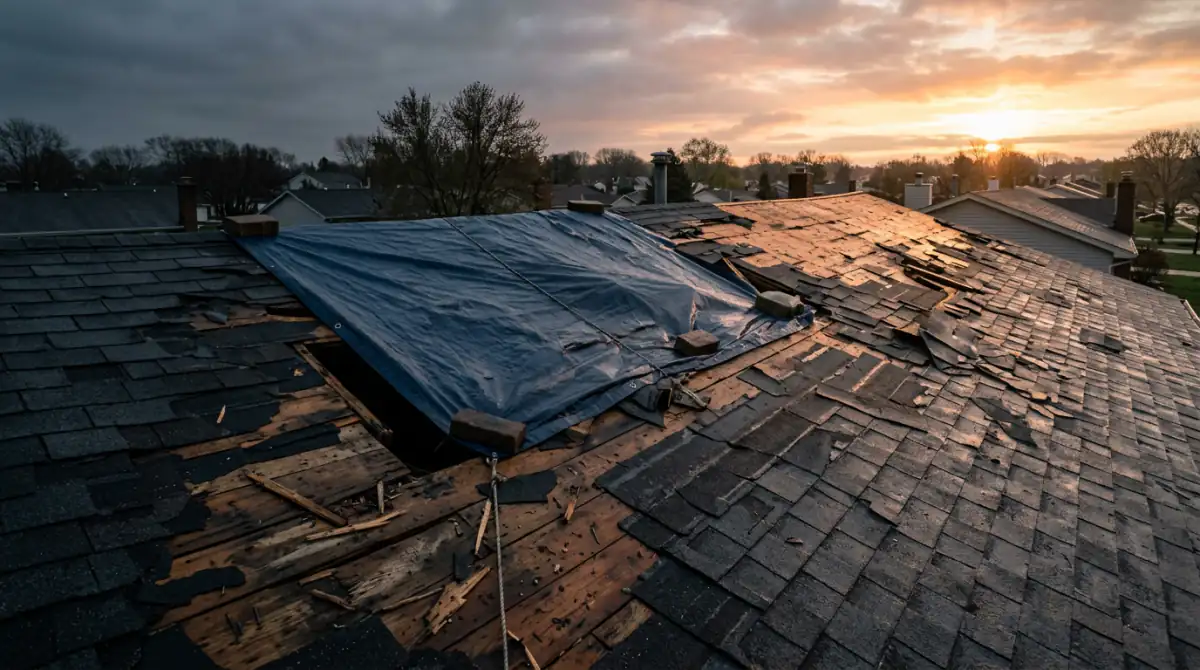
Storm Damage5 min read
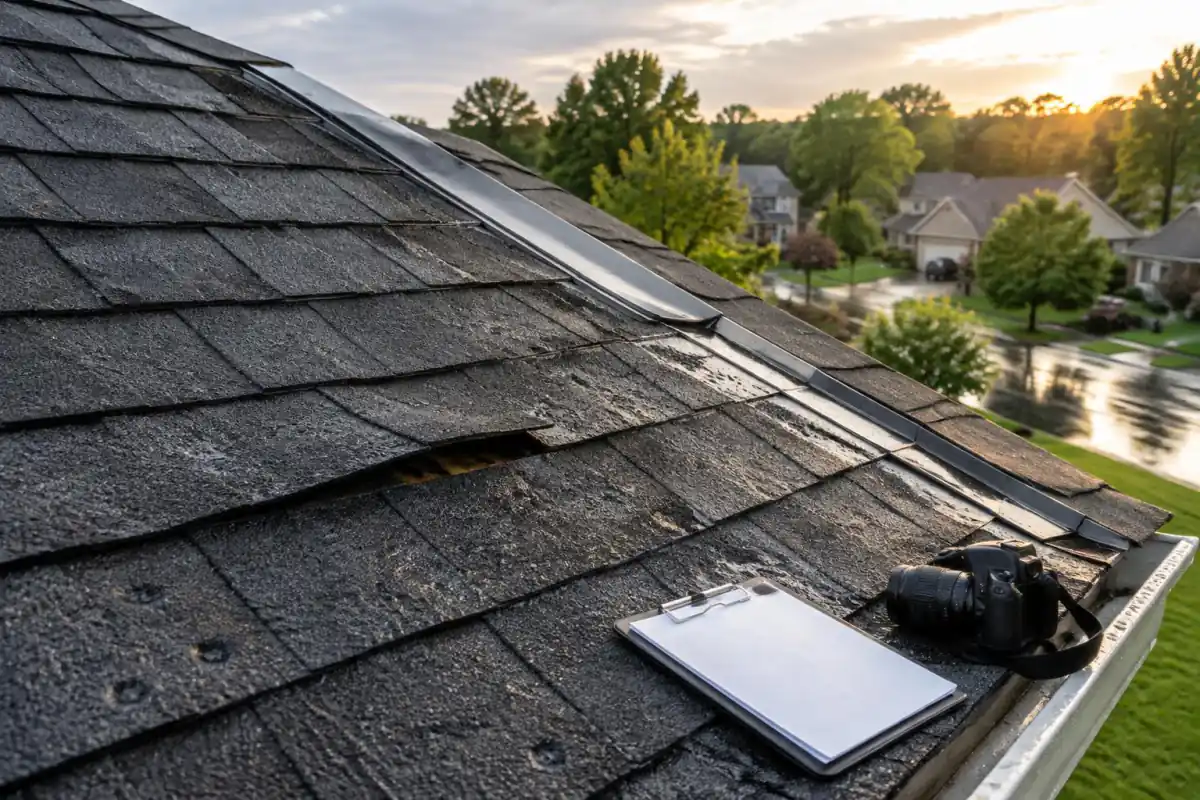
North Carolina storms can damage a roof without leaving an obvious leak. High winds may lift shingle edges and loosen seals, while hail can bruise the asphalt layer or knock away protective granules. From the ground, look for shingles that appear shifted, curled or missing, and check gutters and downspouts for an unusual amount of loose granules.
Inside the home, new ceiling stains, damp insulation, peeling paint and musty attic odors can signal that water has found a path beneath the roofing system. A leak may appear several feet away from the damaged area, so the stain alone rarely identifies the full repair. Avoid climbing onto a wet or storm-damaged roof; photographs taken safely from the ground are a better first step.
Document the date of the storm and every visible concern before temporary work begins. A professional inspection should cover shingles or membrane, flashing, penetrations, valleys, gutters, drainage and the attic where accessible. Clear photographs and a written scope help you understand whether a targeted repair is enough and provide useful evidence if an insurance claim is appropriate.
Act quickly when water is entering the building, but do not let urgency force you into a full replacement without an explanation. Raleigh Roofing Group identifies the source, explains the repair and replacement options, and provides a written estimate so you can make an informed decision.